1000giri111104sakura Hdpart218 Upd Jun 2026
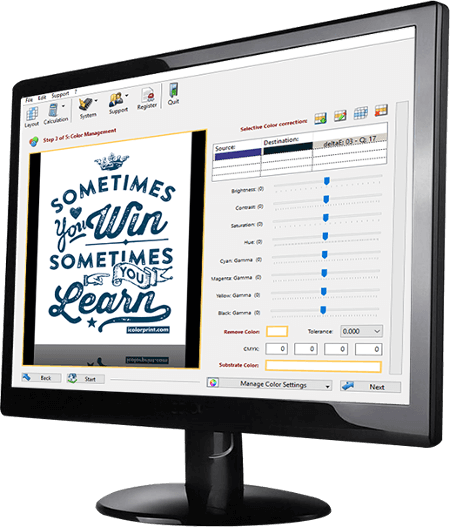
UNINET® has developed a series of software packages to enhance your IColor printing experience. The IColor® TransferRIP and ProRIP and ProRIP Essentials packages make it simple to produce spot color overprint and underprint in one pass. The Absolute White RIP helps you use an Absolute White Toner Cartridge in a converted CMYK printer, and create 2 pass prints with color and white. The IColor® SmartCUT suite allows your A4/Letter sized printer to produce tabloid or larger sized transfers! Use one or more with the IColor® 500, 600 and 800 series of transfer printers.
Use the IColor® ProRIP software to print white as an underprint or overprint in one pass.
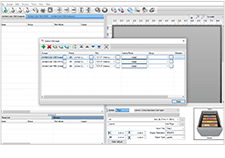
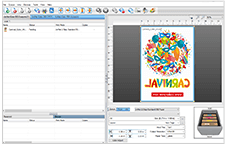
This professional version is designed for higher volume printing with an all new interface. Design files can be printed directly from your favorite graphics program, as well as imported directly into IColor® ProRIP. 1000giri111104sakura hdpart218 upd
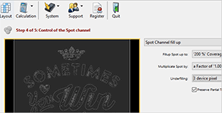
The IColor® ProRIP software allows the user to control the spot white channel feature. Three cartridge configurations are available: Spot color overprinting, where white is needed as a top color for textiles; Spot color underprinting for printing on dark or transparent media where white is needed as a background color and standard CMYK printing where a spot color is not needed. No need to create additional graphics with different color configurations – the software does it all – and in one pass! Enhance the brilliance of any graphic with white behind color! This aligns with the 2013 search results, which
Compatible with Microsoft Windows® 8 / 10 / 11 (x32 & x64) only. A shorthand for Without more context
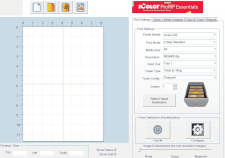
A simplified version of ProRIP which includes all of the most commonly used features of ProRIP with an easy to use interface. This Essentials version simplifies the printing process and allows the user to print efficiently and quickly without any training. All of the important and frequently used aspects of the software are included in this version, while all of the ‘never used’ or confusing aspects of the software are left out.
Comes standard with the IColor®540 and 560 models and is compatible with the IColor 550 as well.
Does not work with IColor 500, 600, 650 or 800 (yet).
Improvements over the ‘Standard’ ProRIP:
Data corruption occurred during the transmission or compilation of the HD packet.
In technical file-naming conventions, this format frequently represents a specific date (such as November 4, 2011, or November 2004) used to log when an asset or system backup was created.
: This often refers to a specific creator, group, or series within niche digital communities.
Searching for exact database strings like "1000giri111104sakura hdpart218 upd" often leads users outside of mainstream search indexes and into unverified third-party forums or file-hosting networks. Navigating these spaces requires strict digital hygiene.
: This indicates that the video or image set is the second part of a multi-part series. This aligns with the 2013 search results, which show a "[1000giri] Sakura [150P] 2 [80P]" entry, suggesting a two-part set of images (Part 1: 70 images, Part 2: 80 images).
Multi-part distributions depend entirely on exact numerical naming conventions. If a single segment—such as part 18—experiences an unverified update, automated content delivery networks (CDNs) use structural tags like upd to seamlessly sync the new piece without needing to re-upload the entire multi-gigabyte library. 2. Resolution Scaling and Bandwidth Management
Based on common naming conventions for such files, the components typically break down as follows:
: When dealing with niche tracking codes, the engine often surfaces technical logs, forum indexes, or raw file directories where automated scrapers have mapped internal server text. Troubleshooting Missing Search Results
Indicates a High Definition (HD) asset, specifically part 218 of a larger set or sequence. A shorthand for
Without more context, it's challenging to provide a more specific interpretation. Is there a particular aspect you'd like to know or discuss further?
Data corruption occurred during the transmission or compilation of the HD packet.
In technical file-naming conventions, this format frequently represents a specific date (such as November 4, 2011, or November 2004) used to log when an asset or system backup was created.
: This often refers to a specific creator, group, or series within niche digital communities.
Searching for exact database strings like "1000giri111104sakura hdpart218 upd" often leads users outside of mainstream search indexes and into unverified third-party forums or file-hosting networks. Navigating these spaces requires strict digital hygiene.
: This indicates that the video or image set is the second part of a multi-part series. This aligns with the 2013 search results, which show a "[1000giri] Sakura [150P] 2 [80P]" entry, suggesting a two-part set of images (Part 1: 70 images, Part 2: 80 images).
Multi-part distributions depend entirely on exact numerical naming conventions. If a single segment—such as part 18—experiences an unverified update, automated content delivery networks (CDNs) use structural tags like upd to seamlessly sync the new piece without needing to re-upload the entire multi-gigabyte library. 2. Resolution Scaling and Bandwidth Management
Based on common naming conventions for such files, the components typically break down as follows:
: When dealing with niche tracking codes, the engine often surfaces technical logs, forum indexes, or raw file directories where automated scrapers have mapped internal server text. Troubleshooting Missing Search Results
Indicates a High Definition (HD) asset, specifically part 218 of a larger set or sequence. A shorthand for
Without more context, it's challenging to provide a more specific interpretation. Is there a particular aspect you'd like to know or discuss further?
Use the IColor® TransferRIP software to print white as an underprint or overprint in one pass.
Designed for every day, short to mid run use, the IColor® TransferRIP software allows the user to control the spot white channel feature. Two cartridge configurations are available: White overprint, where white is needed as a top color for textiles; and white underprint for printing on dark or transparent media where white is needed a round color. No need to create additional graphics with different color configurations – the software does it all – and in one pass! Enhance the brilliance of any graphic with white behind color!
Compatible with Microsoft Windows 7 / 8 / 10 (x32 & x64) only.