
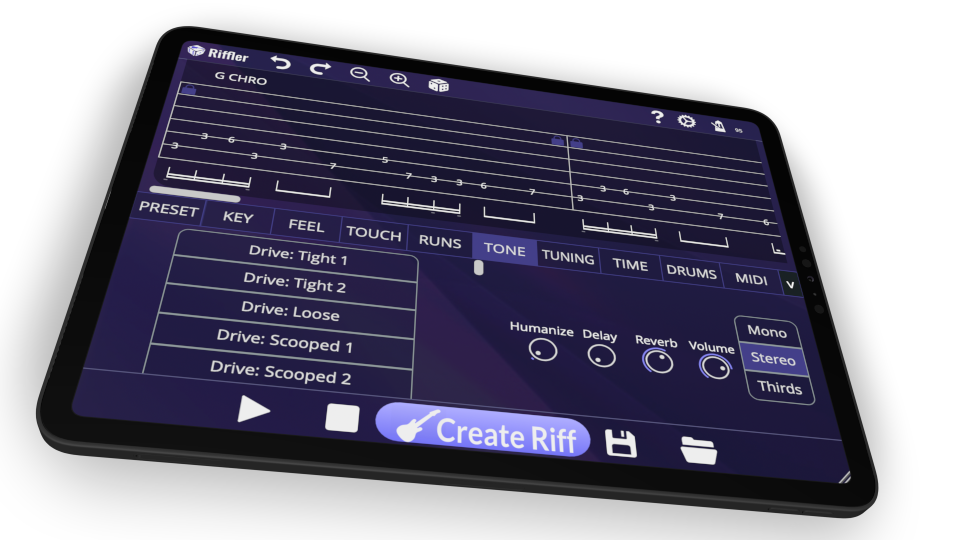
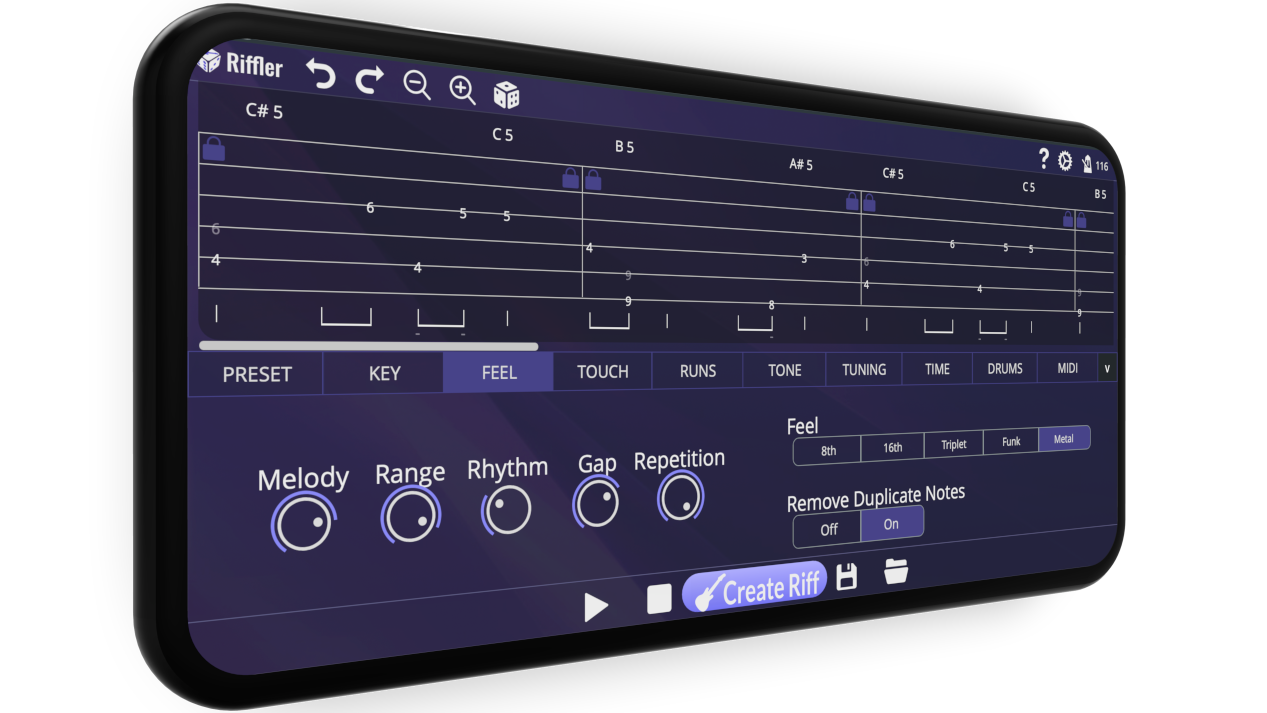
Riffler creates unique, copyright-free guitar riffs instantly. There are a huge range of preset styles, whilst advanced users can explore a wide range of customization options to fine-tune their sound. Riffs can be exported as an audio* or MIDI file and, as Riffler is a VST* and AUv3* plugin, it can be used as a standalone app or inside a host DAW*.
*Not currently on Android.



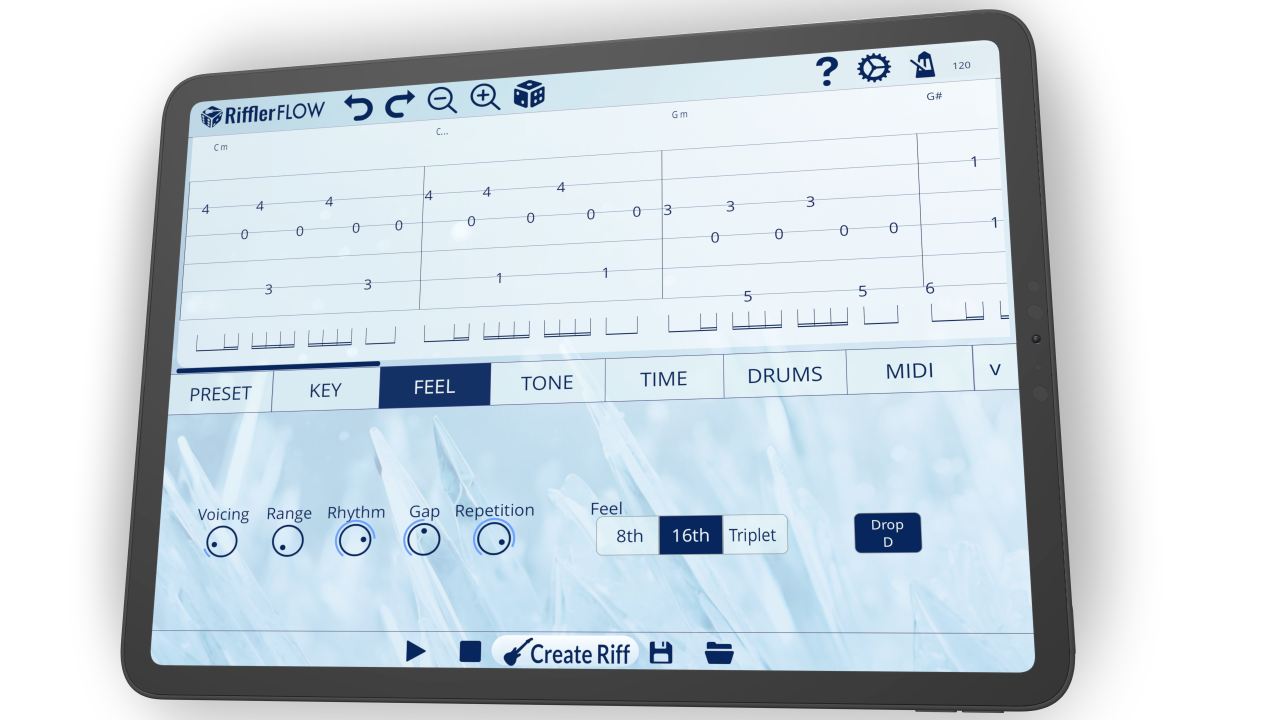
The original Riffler was perfect for instantly making heavy, distorted, scale based riffs. Riffler Flow is a brand new app that instantly generates softer, clean, arpeggio based riffs at the press of a button. Perfect for rock, hip-hop, EDM and more, Riffler Flow includes the same great features as the original Riffler including audio and MIDI export and the ability be used as an AUv3 inside a host DAW.
The JHD2x16 in Proteus often defaults to an address of 0x76 or 0x7E (depending on the exact library version), whereas real-world modules usually default to 0x27 or 0x3F .
// Function to send commands and data to the LCD over I2C void LCD_Write(unsigned char addr, unsigned char value) I2C_Start(); I2C_Write(0x7C); // Device address (JHD2x16I2C exclusive address!) I2C_Write(addr); // Control byte (e.g., 0x00 for command, 0x40 for data) I2C_Write(value); // The actual command or character data I2C_Stop();
Properly routing the I2C bus lines is critical. I2C relies on an open-drain architecture, meaning the communication lines require pull-up resistors to function properly inside the Proteus simulator. jhd2x16i2c proteus exclusive
An I/O expander integrated circuit (PCF8574). Step-by-Step Circuit Design in Proteus
If you're diving into I2C displays, you'll need the right libraries to make it all work. You can download the necessary library here to get started. For your next project, The JHD2x16 in Proteus often defaults to an
To successfully simulate this "exclusive" piece, standard libraries may fail. You often need specialized drivers: Library Requirement : The standard LiquidCrystal library usually does not work. Use the DFRobot_RGB_LCD1602 DF Robot LCD Point H libraries for correct configuration. Installation Download the files for the JHD module. Place these files in the folder of your Labcenter Electronics directory (usually in Program Files).
Double-click on your Microcontroller component (e.g., ATMEGA328P) to open its Properties dialog box. An I/O expander integrated circuit (PCF8574)
But once you have jhd2x16i2c , it's the to simulate I2C LCDs in Proteus – exclusive to advanced library packs.
Check the simulator properties box to confirm the hex address matches the configuration parameters specified in your software library initialization macros. 5. Firmware Implementation Example (Arduino IDE / C++)
Labcenter Electronics has started integrating native "I2C LCD" models in Proteus 8.9 SP3 and above. As of 2025, many modern versions ship with a component simply named LCD_I2C (16x2).