System Design Interview Fundamentals Rylan Liu Pdf Repack
*SysInfo PST File Splitter Fully Secured Free Download.
*SysInfo PST File Splitter Fully Secured Free Download.
Know the Key Advantages of the Online PST File Splitter by SysInfo
Know in what scenarios the Sysinfo PST Split Tool is a smart choice
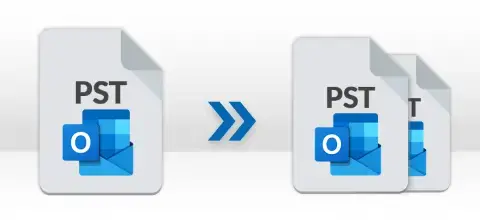
Sometimes, users look for a solution to divide their large PST files into multiple PST files. Then, by opting for SysInfo PST File Splitter open source, you can easily break the big Outlook PST files without any data loss.
Oversized Outlook PST files are more prone to corruption. Splitting PST into multiple smaller PSTs reduces the chance of corruption. The best tool to use is SysInfo PST Splitter allows users to Split large PST Files directly.
Users wish to reduce the size of Outlook data files, to manage PST data efficiently. Also, it is easy to export their data to Outlook. Hence, by using SysInfo PST File Splitter Utility, users can easily reduce the size of the oversized PST.
A common mistake candidates make is diving into drawing diagrams immediately. A structured framework keeps the conversation organized and ensures you hit all the interviewer's evaluation criteria.
Round robin, least connections, or consistent hashing.
The interviewer will usually guide you toward a specific bottleneck or unique challenge within your high-level design.
Sketch an end-to-end blueprint of the core workflow. Focus on the macro-level components: Web, Mobile, or IoT applications.
However, remember the goal. The interviewer is not looking for a parrot who recites "use Redis for caching." They are looking for an engineer who says: "Given our budget constraints and the fact that we need 99.999% consistency, we will sacrifice a small amount of write latency by using a write-through cache and a PostgreSQL cluster with synchronous replication."
That one page in the PDF caused three senior engineers to email him: "I've made that mistake. Twice."
Before your interview, skim the PDF one last time. Look at the diagram of the "Standard Web Architecture" (CDN -> LB -> App -> Cache -> DB). That diagram is your battle map. Do not deviate until you have a reason to.
Helps candidates seamlessly navigate from ambiguous, high-level user requirements to precise, detailed component-level architectures.
: It provides a structured approach for answering questions coherently, ensuring you cover everything from clarifying requirements to discussing trade-offs.
Engineers frequently search for comprehensive resources like to find a structured blueprint for navigating these complex discussions. This article breaks down the foundational concepts, architectural pillars, and step-by-step frameworks necessary to ace your next system design interview. 1. The Core Objectives of a System Design Interview
Every read receives the most recent write or an error.
Sysinfo PST Splitter Tool specifications, users can follow before use of this utility for ease of working

| Version: | 23.3 |
| Size: | 43 MB |
| License: | Multiple User |
| Release Date: | 20 March, 2023 |
| Edition: | Home, Administrator, Technician, and Enterprise |

| Processor: | Intel® Core™2 Duo E4600 Processor 2.40GHz |
| RAM: | 8 GB RAM (16 GB Recommended) |
| Disk Space: | Minimum Disk Space - 512 MB |
| Support Outlook Versions: | Office 365, 2019, 2016, 2013, 2010, 2007, 2003, 2002, 2000, 98, and 97. |
| Support MS Exchange Server: | 2019/ 2016/ 2013/ 2010/ 2007/ 2003/ 2000/ 5.5 and 5.0. |
| Supported Windows: | 11, 10/8.1/8/7/, 2008/2012 (32 & 64 Bit), and other Windows versions. |
Easy four steps to divide PST files into multiple smaller Outlook data files.


SysInfo's Award-Winning Software, Highly Rated by Experts in the Best Category.




Cnet rate a 5-star rating to SysInfo Split PST File Tool for its extraordinary performance of splitting PST files into multiple small PST. Furthermore, it recommends users use it because the utility is competent enough to maintain folder hierarchy and ignore duplicate emails with 100% accuracy. View more

SysInfo PST Splitter got 5-start by Software Suggest for its unbreakable performance to safely and securely split Large Outlook PST files (Email, calendars, contacts, tasks) into individual PST files without losing any data. View more
Use the trial version to evaluate the tool and then purchase the premium version
| Product Features | Free Version | Full Version |
|---|---|---|
| Split large PST file | 50 Items per folder | All |
| Split PST File by Size | 50 Items per folder | All |
| Split PST by Date | 50 Items per folder | All |
| Split PST file by the sender | 50 Items per folder | All |
| Split PST file by Folder | 50 Items per folder | All |
| Ignore Duplicate Email | ||
| Feature to define PST file size | ||
| Apply Password & Show Password | ||
| Date Filter | ||
| Single File and Separate PST for Selected Folder | ||
| Create Single File & Create Separate PST | ||
 |
Download | Buy Now |
A common mistake candidates make is diving into drawing diagrams immediately. A structured framework keeps the conversation organized and ensures you hit all the interviewer's evaluation criteria.
Round robin, least connections, or consistent hashing.
The interviewer will usually guide you toward a specific bottleneck or unique challenge within your high-level design.
Sketch an end-to-end blueprint of the core workflow. Focus on the macro-level components: Web, Mobile, or IoT applications.
However, remember the goal. The interviewer is not looking for a parrot who recites "use Redis for caching." They are looking for an engineer who says: "Given our budget constraints and the fact that we need 99.999% consistency, we will sacrifice a small amount of write latency by using a write-through cache and a PostgreSQL cluster with synchronous replication."
That one page in the PDF caused three senior engineers to email him: "I've made that mistake. Twice."
Before your interview, skim the PDF one last time. Look at the diagram of the "Standard Web Architecture" (CDN -> LB -> App -> Cache -> DB). That diagram is your battle map. Do not deviate until you have a reason to.
Helps candidates seamlessly navigate from ambiguous, high-level user requirements to precise, detailed component-level architectures.
: It provides a structured approach for answering questions coherently, ensuring you cover everything from clarifying requirements to discussing trade-offs.
Engineers frequently search for comprehensive resources like to find a structured blueprint for navigating these complex discussions. This article breaks down the foundational concepts, architectural pillars, and step-by-step frameworks necessary to ace your next system design interview. 1. The Core Objectives of a System Design Interview
Every read receives the most recent write or an error.
Verified Customer Reviews for SysInfo PST File Split Tool
Step 1: Install and Start the SysInfo PST File Splitter.

Step 2: Now, click on Add Files and add PST files to split.

Step 3: After adding the PST files to the software, click Next.

Step 4: Select the folders and choose the Split option as per needed.

Step 5: Choose optional features and define the destination path.

Step 6: Finally, click on Split, and the splitting process begins.